
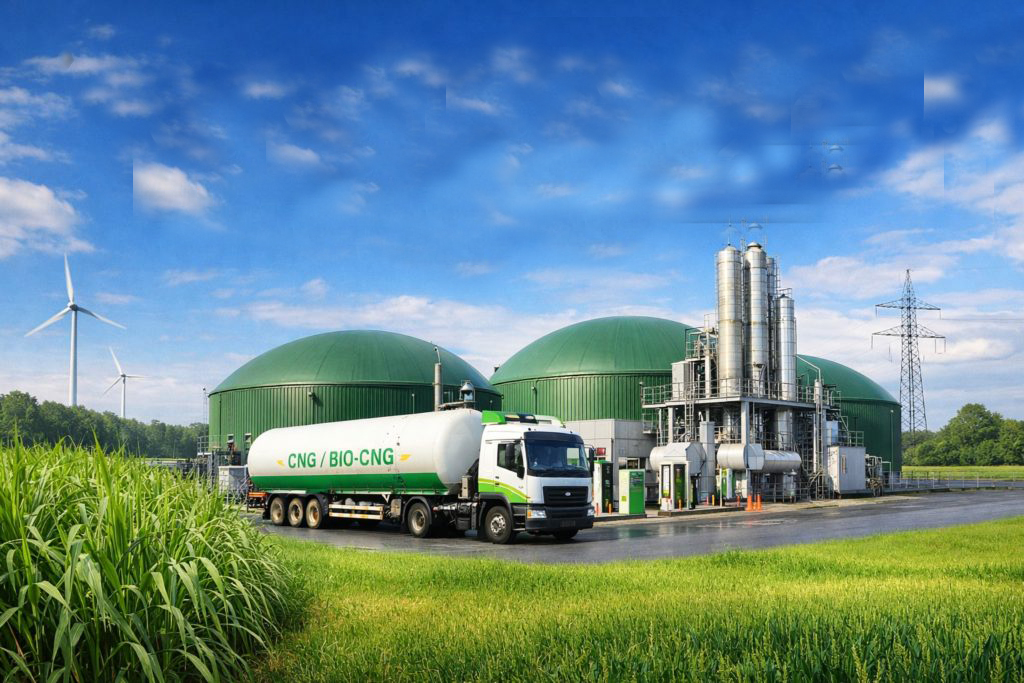
Every post-harvest season, air pollution from open crop stubble burning and decomposing agricultural residue costs the Indian economy billions of dollars in health expenses and lost productivity. Compressed Biogas (CBG) offers the definitive closed-loop solution.
The National SATAT Framework
Launched by the Ministry of Petroleum and Natural Gas (MoPNG), the SATAT (Sustainable Alternative Towards Affordable Transportation) initiative envisions setting up 5,000 commercial CBG plants across India. The objective is twofold: reduce the nation’s heavy dependence on imported crude oil and liquefied natural gas (LNG), and create decentralized rural wealth.
By subjecting crop stubble, sugarcane press mud, cattle manure, and municipal wet waste to anaerobic digestion, microorganisms convert complex organic polymers into methane (CH4) and carbon dioxide (CO2).
Bio-CNG vs. Fossil CNG: The Net-Zero Distinction
While conventional Compressed Natural Gas (CNG) is a mined fossil fuel, Compressed Biogas is completely carbon neutral. Because the organic carbon consumed by crops was absorbed from the atmosphere within the same agricultural cycle, combusting purified CBG adds zero net fossil carbon to the global biosphere.
High-Yield Multi-Stage Purification
Raw biogas emerges from digesters with approximately 55-65% methane, with the remainder composed of CO2, water vapor, and corrosive hydrogen sulfide (H2S). To attain automotive fuel grade, Shree Alliance employs continuous multi-stage scrubbers and selective membrane separation.
The resulting product boasts a methane concentration exceeding 95%, equivalent or superior to commercial fossil CNG in calorific value and engine combustion characteristics.
The Organic Fertilizer Bonus: Fermented Organic Manure (FOM)
Equally vital is the solid and liquid byproduct of digestion: Fermented Organic Manure (FOM). Rich in stabilized organic carbon, nitrogen, and beneficial soil microbes, this organic fertilizer is supplied back to regional farmers, reversing decades of soil degradation caused by excessive chemical urea use.